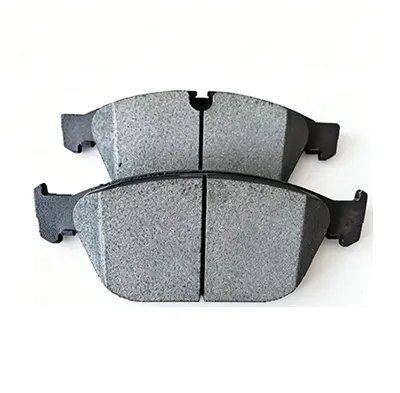
The coefficient of friction refers to the frictional effectiveness of car brake pads and is an important factor in evaluating their quality. Imagine applying a force to a 100kg object on a horizontal surface; if this force equals the object's weight, the coefficient of friction between the object and the road surface is 1. So, what's the difference between a high and low coefficient of friction for brake pads?
The difference in the coefficient of friction between brake pads is the magnitude of their frictional force. A higher coefficient of friction results in greater braking force, more sensitive braking, and the car can generate greater braking force with less pedal force, achieving better braking performance. However, higher isn't always better. A coefficient of friction that is too high or too low will negatively impact braking performance.
If the coefficient of friction is too high, the brakes may lock up or become overly sensitive, resulting in poor comfort and heat resistance. If the coefficient of friction is too low, the brakes will become unresponsive. Neither of these conditions is desirable and poses a serious threat to driving safety. The coefficient of friction for ordinary brake pads is approximately 0.3-0.4.