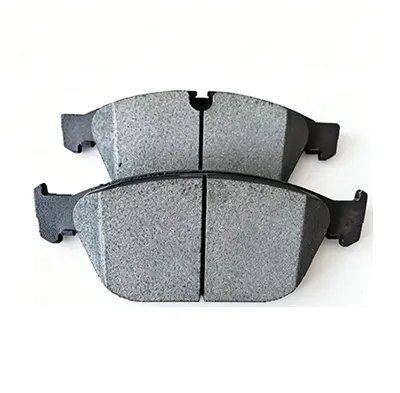
The brake shoes are the friction pairs in a drum brake. Driven by hydraulic pressure, they swing outwards around their fulcrum, pressing their friction linings against the inner surface of the rotating brake drum. This generates frictional torque, converting the vehicle's kinetic energy into heat, thus achieving deceleration or stopping.
When the driver depresses the brake pedal, the hydraulic system pushes the brake wheel cylinder outwards. The piston, via a mechanical linkage mechanism, pushes the brake shoes to the sides, bringing the friction linings into contact with the inner wall of the rotating brake drum. The frictional torque generated at the contact surface decelerates the wheel, and kinetic energy is dissipated as heat. Furthermore, drum brakes possess a unique "self-amplifying" characteristic: the friction generated during braking further enhances the pressure of the brake shoes against the drum wall, forming a positive feedback mechanism of "braking-clamping-re-braking," thereby amplifying the braking force.
After the brakes are released, a return spring pulls the brake shoes back to their initial position, ensuring a standard gap of 0.2-0.5 mm between the friction linings and the brake drum. This design effectively prevents abnormal wear in non-braking conditions.